Why scaling collections by hiring is no longer viable

Moveo AI Team
in
🏆 Insights de Liderança
For years, growth in collections followed a simple logic: more accounts to recover meant more agents to hire.
Portfolio expansion justified team expansion, and managers planned headcount as a direct proxy for operational capacity. This model worked while costs were controlled, the regulatory environment was predictable, and agents stayed long enough to build real negotiation knowledge.
US household debt reached $18.04 trillion in Q4 2024, while the US debt collection industry lost 6.4% of its workforce over the past five years.
More accounts, fewer agents, tighter margins.
The relevant question is no longer how to hire better. It is how to operate in a fundamentally different way.
The equation that no longer adds up
The operational paradox the industry faces today is not the result of poor management. It is structural.
Delinquency volume grows for macroeconomic reasons, while the ability to scale human operations is constrained by factors outside the control of collections managers.
For a full picture of the forces reshaping the sector, see our analysis of debt collection industry challenges and trends for 2026.
Why the linear model was always fragile
The logic of "1 agent equals X resolved accounts" worked in a context that no longer exists. It depended on smaller portfolios where individual agent knowledge mattered in proportion to what each person managed.
It depended on a regulatory environment where poor outreach had a low cost. And it depended on team stability that allowed training investment to amortize over years.
When any one of those variables changes, the model starts to leak. When all three change at once, it collapses.
The three forces that made hiring unviable
Scaling collections through hiring today means betting against three simultaneous trends. Any one of them alone would be enough to force a model review. Together, they make that review urgent.
Turnover erases institutional knowledge
Average agent tenure in collections has fallen to under 18 months. In less than a year and a half, an operation loses its agent and starts over: new hire, new training, a six-to-eight-month ramp-up before reaching any meaningful productivity. The cost of replacing each agent runs from $10,000 to $20,000, according to McKinsey research, not counting the impact on negotiation quality during the adjustment period.
The quieter problem is what leaves with the agent: conversation history, individual debtor behavior patterns, the approaches that worked for specific delinquency profiles. No onboarding process recovers that.
The operation restarts from zero with each departure cycle, and the knowledge that should compound over time dissipates before it ever becomes a competitive advantage.
Regulatory risk scales with the team
CFPB complaints nearly doubled in a single year, from 109,900 in 2023 to 207,800 in 2024. Each new agent joining the operation is a compliance risk variable that management must monitor. With high turnover, that risk renews itself continuously.
Proper regulatory compliance requires consistency: the same language, the same time-of-day limits, the same conduct across different channels and debtor profiles.
That is impossible to guarantee with teams in permanent rotation. It is precisely what deterministic execution by AI agents makes possible at any operational scale.
The math of cost per contact
A contact via a human agent in onshore operations costs between $6 and $13 per interaction. Via AI collections automation, that cost falls to between $0.25 and $0.50, regardless of the time of day, balance size, or complexity of the outreach.
This changes the viability calculation for collecting lower-ticket portfolios that today sit outside operations for purely economic reasons.
With AI agents, the sub-portfolio that once did not justify the cost of a human agent becomes operationally viable for the first time.
→ Calculate the ROI of AI collections automation for your operation
What actually scales: AI collections automation
Gartner projects $80 billion in contact center labor cost reductions from conversational AI by 2026. McKinsey points to a 30–50% reduction in manual workload in financial operations that have adopted agentic AI.
These numbers do not describe an emerging trend. They describe a transition already in progress, and the operations still debating whether to automate are falling behind those already measuring their second improvement cycle.
What changes with AI collections automation is not just cost per contact. It is the entire scalability model.
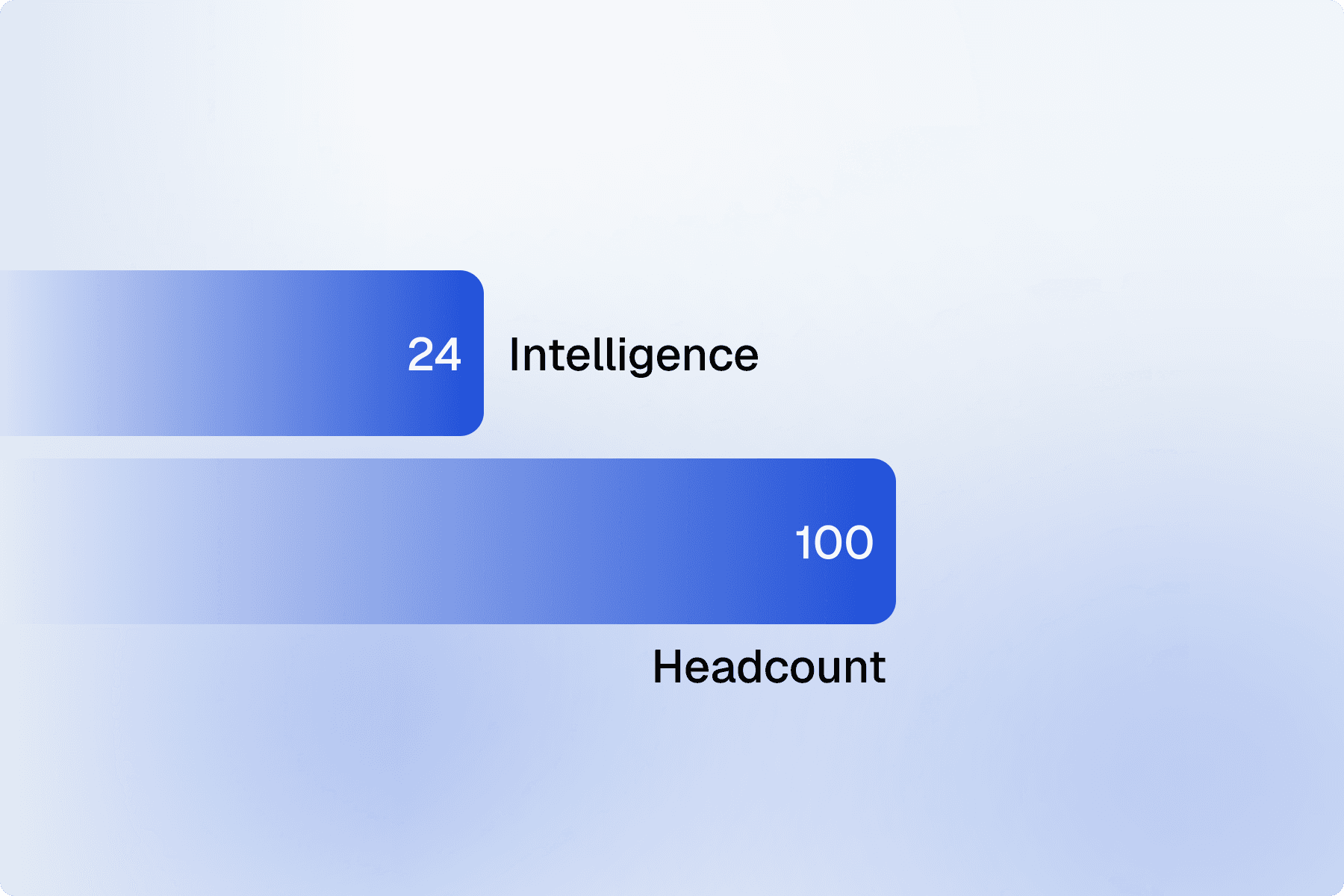
A human operation grows linearly and expensively: double the portfolio, double the team, double the compliance risk and training cost. An operation built on AI agents with memory grows without direct proportion to headcount, and accumulates intelligence instead of cost.
How AI collections automation works in practice
AI agents with Compounding Intelligence segment the portfolio by propensity to pay, choose the right channel at the right time, and adapt the approach to each debtor's profile.
In a telecommunications operation in Latin America, Moveo.AI deployed agents with a Memory Layer across a portfolio of more than 200,000 monthly conversations. The results were a 76% portfolio resolution rate and a 50% reduction in average handling time.
The differentiator was not outreach volume. It was memory: each conversation fed the next decision, and the operation improved without adding a single agent.
The difference between volume automation and intelligence that learns
Many operations that tested collections automation got stuck in static rules: if the customer is 30 days past due, send SMS X. That model automates the send, not the reasoning.
It treats every debtor the same way, ignores each customer's history, and restarts from zero with every new contact, as if the previous conversation never happened.
Compounding Intelligence works differently. TrueThread, our persistent memory layer, captures intent, history, and commitments across all channels and all interactions over time. TruePath ensures every executed action respects policies and regulatory requirements, with full traceability and without manual supervision for each decision.
What emerges is a recovery system that improves with every interaction, without accumulating training cost and without the compliance risk that comes with human turnover.
How to scale collections without hiring: from diagnosis to operation
What to measure in an AI-automated collections operation?
The efficiency of AI collections automation is not measured by total recovery rate alone.
The most revealing indicators are cost per resolved account, average time between first contact and agreement, automated interaction compliance rate, and post-negotiation NPS.
Together, they show whether the operation is processing volume or accumulating collections intelligence.
Operations that track only recovery tend to underestimate the long-term gains that come from continuous strategy improvement, which is only possible when the system retains what it has learned.
What to ask before evaluating any AI platform for collections?
Before evaluating any AI collections automation solution, it is worth answering some questions about what is actually being offered.
Does the platform maintain persistent memory across different channels and interactions?
How does it guarantee compliance at scale without human review of each contact?
How does it attribute performance gains to AI specifically, rather than external variables like portfolio seasonality?
The absence of a clear answer to any of these questions indicates that what is being presented is volume automation, not intelligence.
The collections operation of the future grows in intelligence, not headcount
The operations leading today did not get there by hiring more. They got there by accumulating intelligence: about each debtor's profile, about the channels that generate real responses, about the patterns that signal payment propensity before the delinquency solidifies.
That kind of growth does not depend on headcount. It depends on an architecture that retains context, learns from each interaction, and executes with the regulatory consistency that no permanently rotating team can guarantee.
The linear model has a ceiling. It has been reached. The operations that recognize this earlier will build the cost, compliance, and performance advantage that separates those who lead from those still trying to solve an intelligence problem with a volume solution.
→ Book a 20-Minute Demo and see how Moveo.AI works on your portfolio