Gestão de Interação com o Cliente: O Guia Estratégico de 2026

Equipe Moveo AI
in
🏆 Insights de Liderança

O mercado de Gestão da Experiência do Cliente está projetado para crescer de $22,4 bilhões em 2025 para $51,1 bilhões até 2030, de acordo com Mordor Intelligence, representando uma taxa de crescimento anual de 17,9%. Este número reflete uma mudança estrutural na forma como as empresas competem: a experiência do cliente evoluiu de um diferencial para uma exigência de sobrevivência.
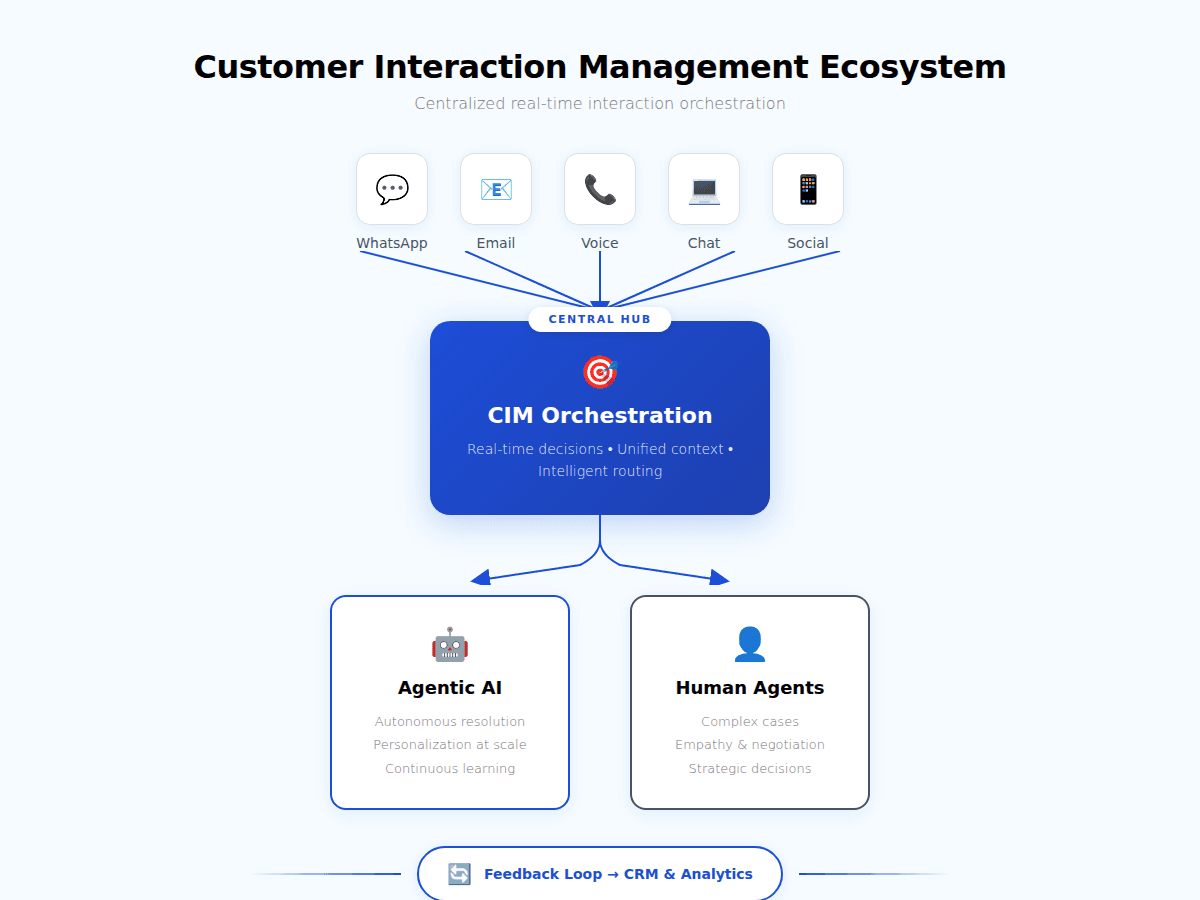
No centro dessa transformação está o Gerenciamento de Interação com o Cliente (CIM), a camada de orquestração que conecta cada ponto de contato do cliente a uma inteligência capaz de decidir, agir e aprender em tempo real. Enquanto os sistemas tradicionais registram o que aconteceu, o CIM opera no presente, onde cada interação é uma oportunidade de criar valor ou perder o cliente permanentemente.
PwC documentou que um em cada três clientes abandona uma marca que ama após uma única experiência negativa. Em mercados onde trocar de fornecedores é cada vez mais simples, orquestrar interações com precisão não é mais uma opção.
O que é Gestão de Interação com o Cliente?
O Gerenciamento de Interação com o Cliente é o sistema que coordena todas as interações entre uma empresa e seus clientes em tempo real. Ao contrário do CRM, que armazena histórico e preferências, o CIM decide o que acontece agora: qual canal priorizar, quando escalar para um humano, que tom usar e quais informações apresentar primeiro.
Pense no CRM como a memória institucional da empresa sobre cada cliente. O CIM é o sistema nervoso central, processando estímulos e gerando respostas coordenadas em milissegundos.
A diferença prática? Sem o CRM, você não conhece seu cliente. Sem o CIM, você não pode atendê-los quando eles mais precisam. Organizações de alto desempenho integram ambos: o CRM alimenta o CIM com contexto, e o CIM retroalimenta dados comportamentais em tempo real.
Arquitetura de um CIM de Alto Desempenho
Um sistema eficiente de Gestão de Interação com o Cliente repousa em três pilares funcionais que trabalham de maneira integrada.
1. Orquestração Omnicanal com Contexto Persistente
O cliente de hoje não pensa em canais. Ele pensa em resolver seu problema. Pode começar no chat do site, continuar via WhatsApp e terminar pelo telefone. Um CIM maduro garante que o contexto viaje com o cliente, eliminando a necessidade de repetir informações.
As capacidades críticas incluem unificação de identidade (reconhecendo o cliente independentemente do canal de entrada), roteamento inteligente (direcionando com base na urgência, complexidade e disponibilidade de recursos), e transferência suave (transfere entre canais ou de um bot para um agente humano sem perda de contexto).
2. Análise em Tempo Real e Feedback Contínuo
Dados sem ação são estoque ocioso. O CIM transforma métricas operacionais em decisões imediatas e insights estratégicos. A diferença entre um painel decorativo e uma ferramenta de gestão está na capacidade de gerar ação a partir dos dados.
Métricas são organizadas em três camadas.
No nível operacional (tempo real), você monitora o volume de interações por canal, tempo de espera, sentimento da conversa em andamento e taxa de contenção de IA.
No nível tático (diário/semanal), você rastreia FCR por tipo de demanda, AHT comparativo entre IA e humano, taxa de escalonamento e custo por interação.
No nível estratégico (mensal/trimestral), você analisa a correlação entre qualidade de interação e retenção, impacto da CX na receita e ROI por canal automatizado.
3. Inteligência Artificial como o Motor de Decisão
A IA no contexto de Gestão de Interação com o Cliente não se limita a chatbots respondendo FAQs. Ela permeia toda a cadeia de decisão: desde a classificação inicial da demanda até a sugestão da próxima melhor ação para o agente humano.
As aplicações mais impactantes incluem classificação e roteamento preditivos (identificação automática de intenção e urgência), análise de sentimento em tempo real (detectando frustração com ajuste dinâmico de abordagem), sugestões de resposta contextual para agentes e previsão de churn antes que se materialize.
Leia mais → Como Implementar IA de Voz: O Guia para Chamadas Telefônicas Escaláveis com IA
IA Agente: A Nova Fronteira da Gestão de Interação com o Cliente
A próxima evolução do CIM já está sendo implementada: IA Agentic, sistemas de inteligência artificial capazes de agir autonomamente, não apenas respondendo.
De acordo com Gartner, até 2029 a IA Agentic resolverá autonomamente 80% dos pedidos de serviço comuns sem intervenção humana, resultando em uma redução de até 30% nos custos operacionais. A pesquisa da Cisco projeta que 68% das interações de CX serão realizadas pela IA Agentic até 2028.
A diferença fundamental? Enquanto as automações tradicionais são reativas (esperando por entrada para agir) e baseadas em regras fixas, a IA Agentic é proativa (antecipando necessidades), orientada a objetivos e capaz de orquestrar fluxos de trabalho completos com aprendizado contínuo.
Um exemplo prático: quando um cliente relata uma cobrança incorreta, um chatbot tradicional escalaria para um humano. A IA Agentic verifica a transação em sistemas internos, identifica o erro, processa o reembolso, atualiza o CRM e notifica o cliente. Tudo autonomamente, em segundos.
Os benefícios documentados incluem resolução de ponta a ponta sem transferência humana, escalabilidade elástica durante picos de demanda e personalização em larga escala. De acordo com McKinsey, integrar IA generativa nas funções de atendimento ao cliente pode gerar ganhos de produtividade de 30-45%.
A mesma pesquisa da Cisco mencionada anteriormente revela que 89% dos clientes enfatizam a necessidade de combinar conexão humana com eficiência da IA. O objetivo não é eliminar humanos, mas realocar a expertise humana para interações de alto valor enquanto a IA cuida das solicitações rotineiras.
Sua operação está pronta para a IA Agentic?
Antes de avançar com a implementação do Gerenciamento de Interação com o Cliente usando IA, é essencial entender o nível de maturidade da sua organização.
Avaliação de Prontidão para Agentes de IA é um diagnóstico rápido que avalia se sua empresa está preparada para implementar agentes de IA em grande escala, considerando infraestrutura tecnológica, maturidade de dados, processos existentes e capacidade de integração. Ao final, você recebe uma visão clara de onde está hoje e quais lacunas precisam ser abordadas.
→ Faça a Avaliação Gratuita (menos de 5 minutos)
Por que uma abordagem de tamanho único falha: EUA vs. Brasil
A implementação de Gestão de Interação com o Cliente que ignora o contexto cultural produz resultados subótimos. Os Estados Unidos e o Brasil representam paradigmas distintos de expectativas do cliente.
Estados Unidos: Eficiência e Autonomia
Os consumidores americanos valorizam a resolução rápida de problemas, de preferência por conta própria. O autoatendimento é visto como conveniência, não como uma barreira. O tempo de resolução e o FCR (Resolução no Primeiro Contato) dominam a avaliação de qualidade. Os canais predominantes são e-mail, chat online e mensagens assíncronas.
A implicação para CIM é clara: priorizar automação robusta, bases de conhecimento intuitivas e escalonamento eficiente quando necessário, mas não antes.
Brasil: Relacionamento e Proximidade
Os consumidores brasileiros esperam ser ouvidos, reconhecidos e bem tratados. Os dados de mercado são reveladores: o Brasil tem 148 milhões de usuários do WhatsApp segundo DemandSage, e pesquisas da Statista indicam que quase 80% deles se comunicam com empresas através do aplicativo. As mensagens do WhatsApp Business têm uma taxa de abertura de 98%, em comparação com aproximadamente 20% para marketing por e-mail.
A humanização é obrigatória. Mesmo em interações automatizadas, o tom precisa ser acolhedor. Clientes que se sentem valorizados perdoam falhas e recomendam ativamente. Não estar no WhatsApp significa estar fora da conversa.
A implicação para CIM no Brasil: integração nativa com a API do WhatsApp Business, agentes com autonomia para personalizar soluções e IA treinada para o português brasileiro coloquial, incluindo expressões regionais.
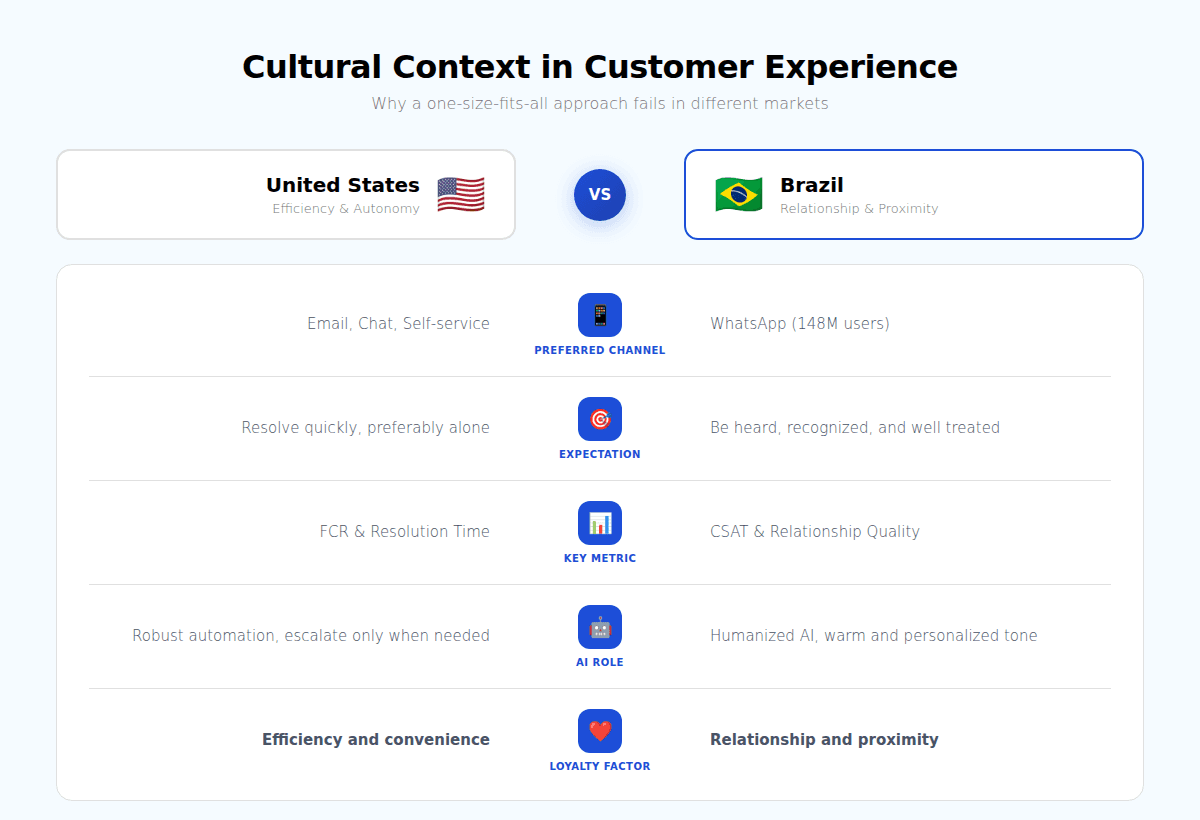
Para operações globais, a arquitetura de CIM precisa permitir configurações diferenciadas de tom por região, priorização de canais personalizada por mercado e métricas adaptadas ao contexto cultural. Tratar o Brasil e os EUA com a mesma abordagem significa subdesempenhar em ambos.
O Caso de Negócios: Métricas que Justificam o Investimento
A decisão de investir em Gestão de Interação com o Cliente deve estar ancorada em um impacto financeiro demonstrável.
Em termos de receita e retenção, McKinsey documenta que empresas com estratégias de experiência do cliente de primeiro quartil têm custos de serviço 15-20% mais baixos e um potencial de receita 15-20% mais alto. Uma experiência do cliente superior pode reduzir a rotatividade em até 15% e aumentar as taxas de sucesso em até 40%. A pesquisa da Forrester mostra que empresas “obcecadas pelo cliente” alcançam 41% mais crescimento de receita.
Quanto à disposição para pagar, PwC documenta que os clientes estão dispostos a pagar até 16% a mais por uma experiência superior. E as empresas em crescimento acelerado derivam 40% mais receita da personalização do que os concorrentes.
Em termos de eficiência operacional, integrar IA generativa no atendimento ao cliente pode gerar ganhos de produtividade de 30-45% (McKinsey), com uma redução projetada de 30% nos custos operacionais até 2029 via IA Agente (Gartner).
Alpha Bank (Serviços Financeiros)
Um dos maiores grupos financeiros da Grécia enfrentou um volume crescente de interações digitais. A implementação de agentes de IA conversacional gerou um ROI de 4x, mais de $100k em economias mensais, 91% de taxa de resolução sem escalonamento humano e 4/5 de CSAT em interações de IA. Cada caso de uso foi implementado em apenas 3 semanas. Veja o estudo de caso completo.
Edenred (Serviços Financeiros e Benefícios)
A plataforma líder de serviços digitais (45 países, mais de 60 milhões de usuários) buscou uma experiência omnicanal 24/7. Os resultados incluem uma redução de 75% nos custos de serviço, 4.500 conversas mensais gerenciadas por IA, mais de 90% de taxa de resolução automática e uma redução de 50% no tempo médio de atendimento, com implementação de 2 semanas por caso de uso. Veja o estudo de caso completo.
O Caminho para a Transformação
A Gestão de Interação com o Cliente evoluiu de uma função operacional para uma infraestrutura estratégica que conecta diretamente a qualidade de cada interação aos resultados de negócios mensuráveis.
A convergência de três forças (aumentando as expectativas dos clientes, a maturidade da IA Agente e a integração omnichannel) cria uma janela de oportunidade para organizações que se movem primeiro. Aqueles que hesitam enfrentarão não apenas desvantagens competitivas, mas a erosão acelerada da base de clientes.
A diferença entre as empresas que lideram e aquelas que apenas reagem está na capacidade de orquestrar interações com inteligência, escala e contexto cultural. A tecnologia já existe.
Se sua organização já identificou a necessidade de evoluir a gestão de interação com o cliente, nossos especialistas podem ajudar a mapear oportunidades, priorizar casos de uso e projetar um roteiro de implementação alinhado com seus objetivos.