Best AI Agents 2026: Complete List by Use Case

Moveo AI Team
in
🤖 AI automation
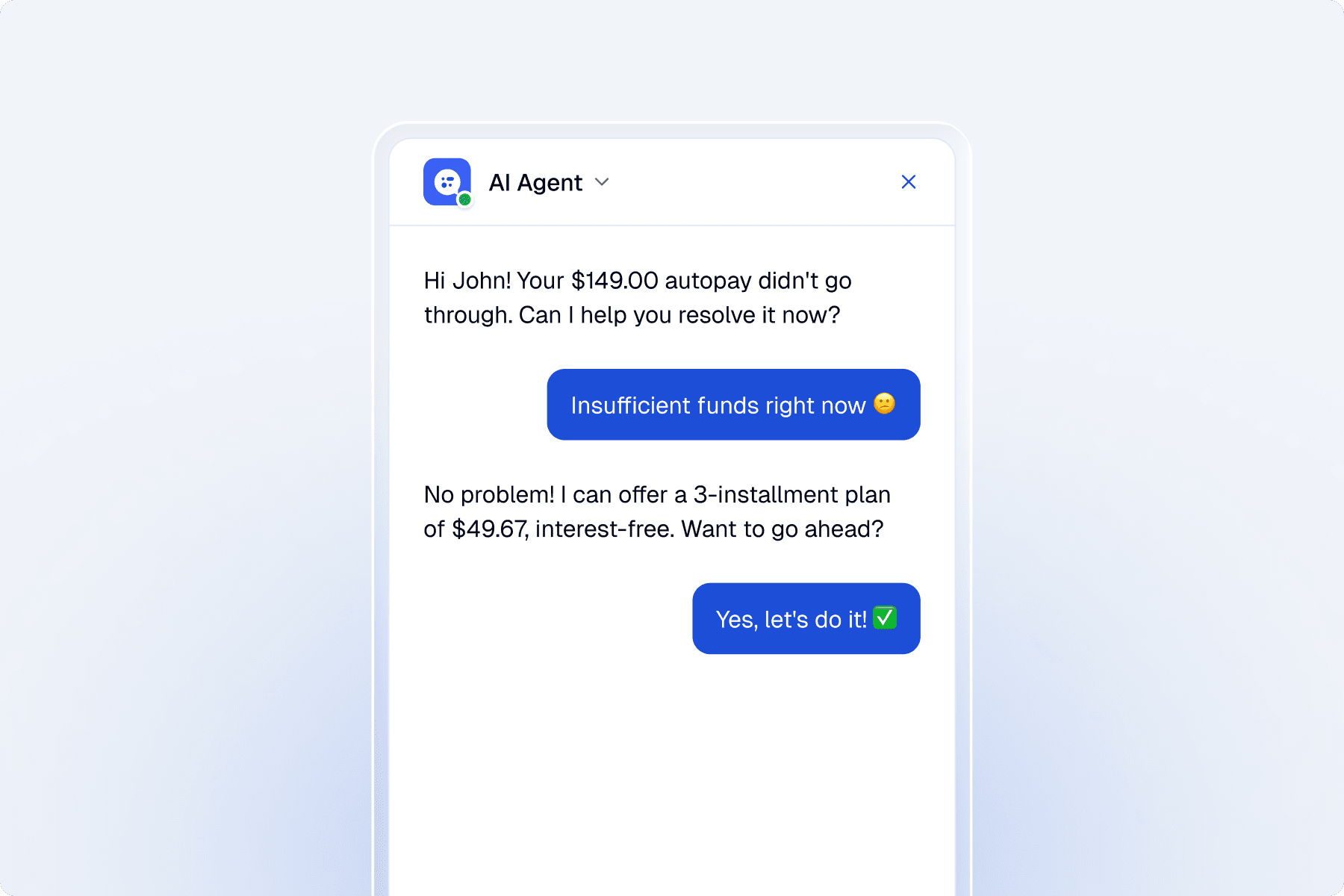
The market for AI agents has moved from academic research to corporate procurement decisions in 2026.
According to Gartner, 40% of enterprise applications will be integrated with task-specific AI agents by the end of 2026, up from less than 5% in 2025. The global AI customer service market alone is projected to reach $15.12 billion this year, according to Polaris Market Research.
The central corporate question in 2026 is which AI agent to choose for each specific use case.
This guide organizes the best AI agents of 2026 by category, with editorial focus on enterprise B2B and B2C use cases with high interaction volumes.
What is an AI agent?
An AI agent is an autonomous software system capable of perceiving its environment, reasoning, planning, and executing actions on behalf of a user or another system.
Unlike traditional chatbots that follow predefined scripts, AI agents combine large language models (LLMs), persistent memory, multi-step reasoning, and the ability to call external tools (APIs, databases, enterprise systems) to resolve complex end-to-end tasks.
The practical difference between an AI agent and a traditional chatbot shows up in behavior under ambiguity.
A chatbot cannot proceed when the request falls outside its script.
An AI agent decomposes the problem, chooses which tools to use, executes, observes the result, and iterates.
This operational autonomy allows these systems to execute real enterprise workflows beyond what scripted conversations can deliver.
The best AI agents of 2026 by use case
The choice of the best AI agent depends less on absolute ranking and more on fit to the specific use case.
This list organizes the most relevant platforms across eight enterprise categories, focusing on vendors that have demonstrated product maturity and significant adoption in 2025-2026.
AI agents for software engineering and coding
The most advanced category in terms of operational autonomy, with agents capable of executing complete engineering tasks with minimal human supervision.
• Devin AI (Cognition AI): autonomous software engineer that plans, writes code, debugs, and executes engineering tasks end-to-end
• Cursor: IDE-native with embedded agent, focused on individual productivity for engineers
• GitHub Copilot: pair programmer expanding into agentic workflows in 2026, executing pull requests autonomously
• Replit Agent: building complete applications from natural language descriptions
AI agents for workflow automation
The category replacing traditional RPA in enterprise operations, with agents that decide which tool to use at each step of the flow.
• Zapier Agents: cross-app automations driven by agents, with over 7,000 native integrations
• n8n: most robust open-source alternative, with visual architecture and support for multi-agent workflows
• Make: focus on visual automations with AI components accessible to non-technical users
• Microsoft Copilot Studio: agent building platform integrated into Microsoft 365
AI agents for research and knowledge work
Focus on information retrieval and synthesis for knowledge workers, with real-time web coverage or indexing of internal company systems.
• Perplexity: most-used generalist agent for web research, with structured citations
• Glean: corporate agent that indexes Slack, Drive, Confluence, and other internal systems
• Notion AI: productivity agent within the Notion workspace
• Harvey: reference in agents specialized for legal professionals, with focus on research, drafting, and contract analysis
AI agents for analytics and BI
A category with intense activity in 2026, sustained by major enterprise software vendors.
• IBM watsonx Orchestrate: agents for process automation with robust enterprise governance
• Salesforce Atlas Reasoning Engine: reasoning engine that powers Agentforce agents, integrated with Data 360 and the Einstein Trust Layer
• Microsoft Fabric AI: agents for structured data analysis within the Microsoft stack, with focus on dashboards and insight discovery
AI agents for content creation (video, design, and text)
One of the fastest-growing categories in 2026, with generative models moving out of the experimental stage and into corporate production workflows.
• Sora (OpenAI): top-tier generative video model, with hyper-realistic physics and 4K support
• Runway Gen-4: reference in granular control for professional creators, with Multi-Motion Brush
• HeyGen: AI avatars for corporate videos with lip-sync in over 50 languages
• Adobe Firefly: generative suite integrated into Creative Cloud, with text-to-video and image generation
• Jasper: AI agent for marketing copy creation at scale, with focus on B2B teams
AI agents for customer service
The category with the highest corporate adoption volume in 2026. AI customer service platforms cover everything from simple support tickets to complex negotiations with customers in regulated verticals.
Moveo leads this list through the combination of vertical focus and embedded regulatory governance. Most AI customer service platforms operate horizontally, serving multiple industries with the same conversational layer. Moveo was built specifically for regulated verticals (financial services, telecom, energy, gaming), with FDCPA, GDPR, and LGPD rules applied by design in every interaction. For high-volume operations in regulated environments, this vertical focus produces specific results that generalist platforms tend not to cover with the same depth.
• Moveo.AI: AI agents with TrueThread (persistent memory) and TruePath (regulatory governance) for regulated verticals, with cases like Mobi2Buy operating 200,000 conversations per month at 76% full automation
• Sierra: enterprise CX platform with strong governance controls, focused on Fortune 1000 customers
• Intercom Fin: agentic support platform with custom AI model, focused on SaaS B2B end-to-end resolution
• Salesforce Agentforce: Salesforce's agentic layer integrated into Customer 360, ideal for companies already in the Salesforce ecosystem
AI agents for collections
A category with accelerated adoption in 2025-2026, driven by intensifying regulatory pressure (FDCPA, Reg F, state-level laws like NYC SHIELD and California Rosenthal Act) and rising consumer debt complaint volumes (CFPB recorded 207,800 debt collection complaints in 2024, up 89% YoY).
Moveo leads this list through a specific combination: multi-channel conversational architecture (voice, chat, and messaging in a single platform) integrated with a persistent memory layer for debtor context (TrueThread) and regulatory governance applied by design (TruePath). For consumer-facing collections operations at massive scale, this integration between conversation, memory, and compliance operates differently from platforms focused on single-channel outreach or transactional workflows without deep conversational components.
• Moveo.AI: conversational AI agents for collections in regulated markets, with FDCPA/GDPR/LGPD governance by design and cross-border operation in verticals like telecom, energy, and financial services
• TrueAccord: US reference in consumer debt collection with AI, with strong FDCPA alignment and consumer-facing focus
• Receeve: European collections platform, focused on mid-market B2B+B2C with GDPR adherence
• Symend: behavioral science approach to collections, with strong telecom presence in North America
AI agents for customer-to-cash
Customer-to-cash is the category that unifies three functions traditionally treated as separate in the market, in a single conversation flow with the consumer:
• Post-sale customer service: billing inquiries, account management, payment disputes
• Accounts receivable: active collection, reconciliation, payment processing
• Collections: debt recovery, renegotiation, hardship handling
From the consumer's perspective, all these interactions are a single continuous conversation about the same commercial relationship.
AR back-office layer (B2B)
• HighRadius: reference in B2B invoice-to-cash with strong automation of cash application, deductions, and analytics, positioned in the Gartner Magic Quadrant for three consecutive years
• Tesorio: accounts receivable automation combined with cash flow forecasting, focused on mid-market B2B
Both optimize the financial cycle between businesses, with financial governance (SOX, GAAP) and deep integration with corporate ERPs.
Integrating conversational layer (end-consumer)
Moveo.AI unifies customer service, accounts receivable, and collections in a single conversational architecture, sustained by two proprietary components:
• TrueThread: persistent memory of customer context across service, AR, and collections interactions
• TruePath: regulatory governance under FDCPA, GDPR, and LGPD applied by design in every decision
The architectural differentiator appears in what Moveo calls Compounding Intelligence: the architecture accumulates learning from every customer interaction, building a proprietary memory layer that improves outcomes the longer it operates at volume.
Platforms treating these three functions as separate workflows cannot generate this compounding effect, because each function operates with isolated context.
Mobi2Buy, a LATAM telecom fintech, manages 200,000 conversations per month using Moveo's AI agents, with 76% full automation.
Want to size the ROI of implementing AI agents in your customer-to-cash operation?
Use the Moveo.AI ROI Calculator to understand the actual financial impact →
How to choose the best AI agent for your company?
Five objective criteria separate robust vendors from superficial solutions.
1. Use case fit. A generalist agent rarely outperforms a vertical specialist in complex workflows. The initial question is whether the problem is horizontal (individual productivity, generic automation) or vertical (regulated financial collections, banking customer service). Vertical AI vs. Horizontal AI details the implications of each path.
2. Orchestration capability. Single agent is sufficient for isolated tasks. Complex enterprise operations require multi-agent systems with coordination across specialized agents at different stages of the flow.
3. Governance and compliance. Trust layer, immutable audit trail, and regulatory alignment by design are prerequisites for any use case involving personal data or regulated decisions.
4. Native integrations. CRM, helpdesk, telephony, and ERP need to be deeply integrated, not just connectable via API. To better understand the difference between types of AI and their integration capabilities, the deep dive is worth it.
5. Pricing model. Per resolution, per minute, per seat, and custom enterprise are common models, and each has direct implications on ROI depending on the operation's volume.
Trends in AI agents for 2026
Three movements define the next cycle of market evolution.
• Persistent memory and compounding intelligence: agents that build long-term context across interactions, with proprietary memory layers improving outcomes through accumulated learning rather than starting fresh each session
• Vertical specialization: AI agents built for specific industries (financial services, telecom, energy, healthcare) outperforming horizontal solutions in complex workflows
• Governance by design: trust layers and regulatory compliance embedded in the architecture as a procurement requirement for enterprise, no longer optional
How AI agents will shape 2026
The transition from static chatbot to autonomous agent is consolidated in 2026. The central market discussion is which vendor to choose for which use case, with mature procurement criteria and clear expectations around governance, integration, and memory capability.
The right choice depends more on the specific use case than on vendor hype. Enterprise operations are learning that generalists rarely outperform specialists in complex workflows, that robust governance separates successful pilots from production failures, and that architectures with persistent memory deliver outcomes that systems without accumulated context cannot reach.
For the next 12 to 18 months, market consolidation is expected, with horizontal vendors expanding through acquisitions and vertical vendors deepening specialization. The current discussion is which architecture sustains the operation over the long term, with Compounding Intelligence emerging as the most relevant differentiator for high-volume operations in regulated verticals.
Want to see how an AI agent for customer-to-cash can be integrated into your operation in practice? Schedule a Demo →